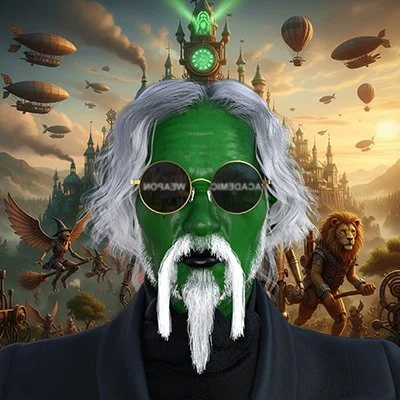
buy Volume I at amazon

In Conclusion – How to be a Lighthearted Academic Weapon
There are no mistakes, just happy accidents. –Bob Ross
Whenever you correct someone’s grammar, just remember that nobody likes you. –Jim Gaffigan
Toy Store Clerk, “The fidget spinner evolved from the yo-yo.” Southern Gentleman, “Haven’t we all.” –conversation overheard in New Orleans
In conclusion, sex and war are somewhat the same and somewhat different. Every generation must relearn the mistakes of their ancestors. There are happy accidents and unhappy accidents. Let’s get started.
Charles Darwin published “The Expression of the Emotions in Man and Animals” in 1872. He told some stories, presented much behavioral data, discussed our facial muscles in detail, and came to a few conclusions regarding the evolution of our behaviors. The author of this book is a big fan of Darwin’s writing style. Interestingly, if you read the book carefully it is clear Darwin is obsessed with blushing. He couldn’t get his head wrapped around why we blush, and how blushing could ever have evolved. More on blushing later.
The author of this book has a similar obsession. Sarcasm. Why should anyone be sarcastic? How could sarcasm ever have evolved? Spoiler alert, our most likely wrong conclusion is sarcasm evolved to deal with stupid bosses and self-serving administrators. All part of life’s checks and balances. More on this later.
That said, humanity is entering a critical period. In 1994, Ukraine, Russia, the UK, and the US signed the Budapest Memorandum. Ukraine gave up their nuclear weapons with security assurances from these three parties, and verbal support from China and France, to defend Ukraine in case of invasion. In 2014, Russia invaded Ukraine. At this point the Orwellian sarcasm hit a new level. No country in their right mind will ever again give up its nuclear arsenal again. This is a train wreck on steroids. Everyone now knows treaties should never be trusted. Unfortunately, the law of the jungle is still the one true law of nature.
While writing this book, for reasons we don’t understand, we started looking at war and genocide data. As we discuss in gory detail in Volume II, deaths from war and genocide scales faster than the population density. For those that are interested, if the Earth’s population reaches roughly 100 billion then everyone will start killing each other all the time. Probably because of traffic jams and road rage. In all honesty, because of a lack of resources. For a world population of 8 billion we predict 2 to 3 billion war and genocide deaths this century. If not this century, then in the 22nd or 23rd due to the randomness of the big ignition. To be clear, this is a data-based prediction. And for reference, statistics predict most of the deaths will occur during the few deadliest events.
This billions of deaths prediction begs a lot of questions. Our sarcastic side has little faith that those in Moscow, Beijing, DC, London, Paris, Brussels, Tehran, Ankara, New Delhi, Singapore, NYC, and the UN can navigate this nuclear tight-rope successfully. Why? Because politics typically leads to spite. Spiteful people usually seek power. Power flows towards capitals. Spite vortices form. Some of these spite vortices grow in size. If and when the mother of all spite vortexes pushes the big red button could they please just blow up the capitals. Unfortunately, we all know that’s not going to happen.
Moving on.
In all honesty, this book started out as a joke. We were curious if I. M. Suslov’s idea that humor makes us smarter because it provides a method for us to ignore and forget bad input had any merit. Then we asked ourselves, “We laugh. How is our voice box wired up to our brain?” Never ask that question. That joke question combined with our casual interest in the human vision system as a camera designer turned into a 6-year odyssey of how the human mind works and evolved.
So where do we start in telling the story of this 6-year odyssey? The ancient’s defined humor as the river of life that runs through us. Today humor mostly means laughter. So let’s start with laughter.
To understand laughter, you must first appreciate that humanity is a remarkable accident. Our amazing sense of humor and our higher-level understanding that life is filled with contradictions is a beautiful thing. As we will get to, balanced humor is a very Tao-like appreciation of reality. For example, when two people accidently try to go through a door at the same time, we often smile, laugh, and say excuse me. It is also interesting to note the baseline behavioral differences in large cities (fast paced, cold) compared to small towns (slower paced, friendly). We believe size, speed, and social structures changes the evolution of temperaments. More on speed and scaling in Volumes II and III.
Until writing this book we didn’t appreciate that our humor is driven by female evolution more so than by male evolution. We owe great thanks to our ancestral moms and their many birthday gifts we take for granted every day. These gifts include walking, talking, and our senses. Top on the list is laughter, and our love of life.
But like most things, humor has a dark side. Laughter can be mean. Conflict, spite, murder, and war make many happy. This book will not sugar coat who we are. We will not avoid inconvenient truths. Motherly-vengeance and motherly-love are the two main branches of the evolutionary tree we call laughter. As we will get to, meerkats, the most murderous of all mammals, are a female dominated society that have taken the motherly-vengeance branch to an extreme. High levels of estrogen combined with high levels of testosterone is a deadly combination.
While meerkats have evolved to form an inward focused society, that circle the wagons and fire inward, wolves have evolved to form an outward focused society. Wolves form packs. Wolves effectively “laugh together” when they attack together. Hyenas definitely laugh together when they attack together. Interestingly, unlike wolves, hyenas are female dominant.
It took us a while to appreciate that “meerkat-like” behaviors and “wolf-like” behaviors are a form of population control when resources are limited. Humans have evolved to possess both types of behaviors. Typically, males are more “wolf-like” and females are more “meerkat-like”. Or in pop-culture terms, males are dogs and females are catty. But humans are more complex, and both males and females often exhibit both behaviors. For example, Vladimir Putin is one big spiteful “mean girl” bitch who commands those he dislikes to be tossed from 5-story balconies in apparent fake suicides, and then smirks thinking he is some kind of clever “mean girl” genius. Oops, sarcastic Freudian slip. We meant to say Putin is a spiteful meerkat. Or as the younger generation would sarcastically say, Putin has zero aura points.
But somehow humans evolved an awareness that we are more than just “the-self”. We advanced to live in groups. We work together to increase the availability of resources. We build civilizations. We develop moral codes. We develop technology. Our sense of humor, our moral codes, and our ability to reason are all intertwined.
We could frame this book in the self-help style, focusing on the health benefits of laughter and balanced humor. We could write from a motivational perspective, focusing on how balanced humor strengthens family and group bonds, allows us to disagree in positive ways, and inspires intellectual creativity. We could write this as a dystopian novel, focusing on how social media is a powerful new "humor" tool, and how companies like Meta view your friends and family members as competitors for your precious screen time, with Meta’s algorithms rewiring our brains in ways we don’t yet fully understand. We choose none of these styles, although the just mentioned themes will pop-up here and there.
Instead, we will write in the new “Lighthearted Academic Weapon” style. The goal is to be funny, informative, and provide focus from a group help perspective. The reader should consider the author, with our multiple personalities, a group of friendly strangers you just met at an airport bar. We are all waiting for a delayed flight. There are jokes. There are insights. And there are random frothy comments (RFCs) to make the unexpectedly delightful airport conversation more enjoyable.
You will not even realize we are discussing topics like philosophy, anthropology, sociology, history, psychology, child development, evolution, genetics, computer science, neurology, biology, physics, chemistry, and art history. Reading this book will be like getting a college education without the annoying student debt and lecture hall smell. More importantly, people who read this book will all share a common language, the language of “humor”. And isn’t that what education is all about, sharing a common language. Upon graduation you will be a “Lighthearted Academic Weapon”. Plus, your LAW degree will come without the annoying baggage of a must win all arguments mindset. Most lawyers view life as a zero-sum game. True leaders understand life is a positive-sum game.
RFC: All arguments and political negotiations should include easy listening jazz in the background. Calming background music makes conflict nearly impossible. The evening news should also be reported with easy listening jazz in the background just to take the edge off. End RFC.
For getting your LAW degree, we suggest you and your friends form a book club and read one chapter a day. Each evening you can discuss the chapter over wine. The great thing about being a “Lighthearted Academic Weapon” is that you don’t take the world too seriously. Or alternatively, you can use this as a coffee table book. When you have friends over and are stumped on what to do, randomly pick and chapter as a topic of discussion. Just looking at the picture from any given chapter should be enough to start a lively discussion.
You and other “Lighthearted Academic Weapons” will soon be able to communicate at a higher level. Discussions will be more meaningful. Silly politics and ridiculous finger pointing a thing of the past. You will learn that the highest form of intelligence is the ability to stand in the shoes of another, laugh together, and figure out the best path forward. Simply put, this is a group-help book.
Volume I is broken into 14 parts:
· Part I: Review of the popular Superiority, Stress Relief, and Nothingness Theories of Humor
· Part II: Darwin and the Evolutionary Theories of Humor
· Part III: Problem Solving and Defect Correction Theories of Humor along with discussions of Baby Laughter
· Part IV: Anthropological and Social Theories of Humor including a discussion on the evolution of sarcasm
· Part V: Humor’s dark side, including murder and genocide
· Part VI: Herstory of Humor
· Part VII: History of Humor
· Part VIII: Psychological Archeology, Blushing, Giggling, and Smiling
· Part IX: Psychological Archeology, Our Brain on Laughter
· Part X: Our notes on the brain’s wiring
· Part XI: Our notes on vision and auditory systems
· Part XII: Memory and imagination
· Part XIII: fMRI and humor mapping the brain
· Part XIV: Concluding remarks and LAW diploma.
The takeaway is that if you read Volume I you will get your LAW BS, Volume II your LAW MS, and Volume III your LAW PhD. Or as our mother liked to say at faculty parties, “You know what BS, MS, and PhD stand for? Bull S#!t, More S#!t, and Piled Higher and Deeper.”
Finally, we apologize for the length of a few of the chapters, especially the chapter on the French Revolution, but there is a lot of background material to put the orgy that takes place in the Cathedral at Notre-Dame into perspective. Throughout the book, pictures and jokes are to make the text come to life. Organization is our best attempt at a natural flow. This is not a research paper. We purposely avoided mathematical equations and most references. Feel free to use “The Google” for deeper dives. We apologize to all those not credited for their work. We did our best. Enjoy.